



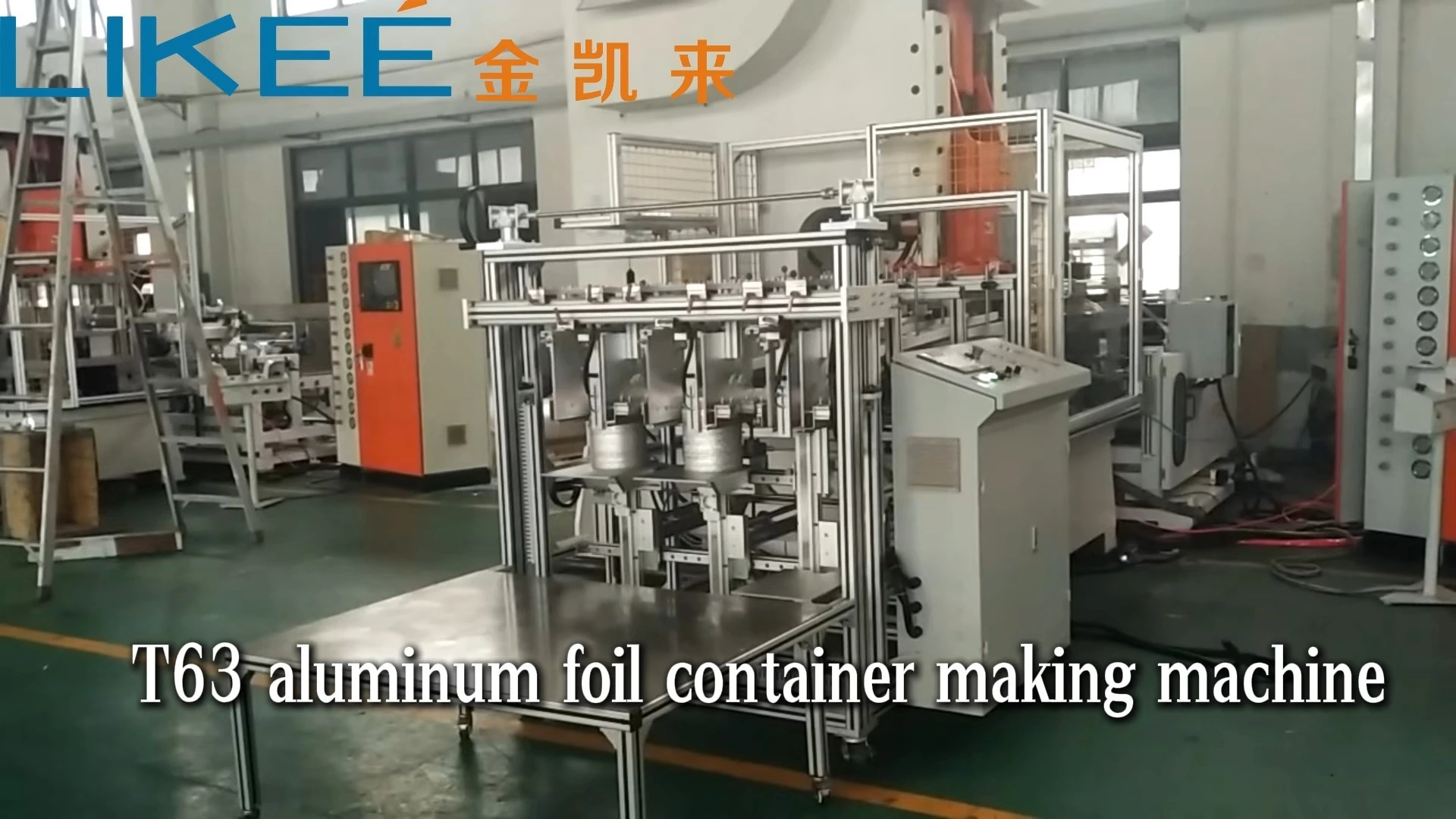
LK-T63 Fully Automatic Factory Mitsubishi Electronic Containers Aluminium Foil Food Trays Production Line Making Machine
LK-T63 Aluminum Foil Container Making Machine Product Description
Looking for a reliable solution to increase your aluminum foil container output while controlling costs? The LK-T63 fully automatic aluminum foil container making machine production line is designed for exactly that.
This line is optimized for the mass production of small to medium-sized aluminum foil containers, integrating the entire process from uncoiling and stamping to stacking. With just one operator for monitoring, the machine runs continuously at an average speed of 50 strokes per minute, delivering stable output. This directly reduces your labor dependency and operational expenses.
We focus on the long-term value of the equipment. The sturdy C-frame structure and solid worktable ensure stable pressing from the ground up, effectively minimizing vibration. The primary stamping unit is made from superior castings, with a design lifespan exceeding 30 years, built to be the reliable backbone of your production for decades to come. Key electrical components feature internationally recognized brands like Siemens, Mitsubishi, and Schneider, signifying greater reliability and ensuring accessible maintenance support worldwide.
Operation is equally simple and smart. The system stores parameters for 60 sets of molds. When changing molds, the hydraulic lifting arm assists a single operator in completing the task in about 15 minutes for fast production switching. The multi-touch screen displays real-time production data and fault alerts, keeping the machine's status clear at a glance.
Backed by over 15 years of experience serving the global market, our products meet international standards. Choosing the LK-T63 means selecting a production system that is efficient, durable, and designed to protect your long-term return on investment.
Key Specifications at a Glance
| Item | Specification |
|---|---|
| Model | LK-T63 |
| Installed Power | 19.8 kW |
| Main Motor Brand | Siemens |
| Stamping Speed | 35-68 Strokes/Minute |
| Average Output | 9,000-12,000 Pieces/Hour |
| Operating Personnel | 1 Person |
| Frame Structure | C-Type Frame |
| Machine Net Weight | Approx. 13,500 kg |
Your Key Benefits
-
Lowers Labor Costs: A true one-operator, fully automatic line requiring no intensive manpower from material feeding to product stacking.
-
Ensures Stable Output: The solid worktable and branded primary components work together to maintain consistent speed during prolonged continuous operation.
-
Long-Term Investment Value: With the primary unit's design life exceeding 30 years, it translates to very low annual depreciation cost for your equipment.
-
Flexible Order Response: Quick mold change functionality supports small-batch, multi-variety production, enhancing your market responsiveness.
-
Global Service Support: An international standard design and service network based on 15 years of export experience supports your business expansion.
Aluminum Foil Container
Aluminum Foil Container Making Machine Detail
Aluminum Foil Container Making Machine Shipping
Questions & Answers on Aluminum Foil Container Making Machine
Q1: How exactly does the "one-person, one-machine" setup save costs for my factory?
A: It means the entire production line requires only one employee for material loading and monitoring to achieve 24/7 operation. Compared to traditional equipment, this can directly save a significant portion of your direct operating labor costs and simplify management.
Q2: How is long-term "stability" guaranteed during high-speed operation?
A: Stability comes from three layers of assurance: 1) Foundation Structure: The heavy-duty C-frame and solid worktable resist impact deformation. 2) Primary Power: The Siemens motor provides smooth power output. 3) Control Pivot: The Mitsubishi PLC ensures precise movements. This combination prevents accuracy loss and part fatigue caused by vibration.
Q3: Are there specific figures for "high speed and efficiency"? How does this help my delivery timelines?
A: Taking a common 450ml container as an example, the LK-T63 can produce approximately 10,000 pieces per hour. The high speed can noticeably shorten the production cycle for individual orders, making it easier for you to handle urgent or large-volume demands and improve customer satisfaction.
Q4: How high is the automation level in "fully automatic high-speed production"?
A: All processes—from automatic coil unwinding and precise feeding to hydraulic stamping, finished product stacking, and scrap recycling—are completed automatically by the machine. The operator's role shifts from manual labor to equipment status supervisor.
Q5: What are the practical daily operational benefits of using "internationally recognized brand" primary parts (e.g., Siemens, Mitsubishi)?
A: The primary benefits are reliability and maintainability. Components from these brands have lower failure rates, ensuring production continuity. Furthermore, their global supply networks mean that if a replacement is ever needed, you can likely source spare parts locally or nearby, effectively reducing downtime.
Q6: Is "primary unit life exceeding 30 years" a theoretical value? What does this mean for me?
A: This is based on the material science and engineering design life of the primary load-bearing structural components (like the frame). For you, it means that throughout the equipment's service life, you won't need to worry about damage or obsolescence of the main frame, significantly lowering the potential risks and replacement costs of your long-term investment.
Q7: As a manufacturer with "15 years of export experience," how is this reflected in the equipment design and after-sales service?
A: The experience shows in the details: equipment voltage can be adapted to various national standards; manuals and the touchscreen support multiple languages; packaging meets ocean shipping standards. When the machine arrives in your country, we've handled similar situations before and can ensure a smoother installation and commissioning process through clear guidance or local support.
WhatsApp: 0086-18930097829